
India's hydropower generation has been significantly constrained in July due to the El Nio effect, which has weakened the southwest monsoon and reduced reservoir levels. This decline, following a 21 per cent year-on-year drop in June 2026, is forcing greater reliance on coal generation and straining grid flexibility amidst rising power demand.
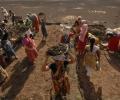
The Indian government has identified 111 districts as 'most vulnerable' to crop damage due to a 43 per cent monsoon deficit, driven by El Nino, which threatens kharif sowing. Agriculture Minister Shivraj Singh Chouhan stated that weak monsoon conditions are expected to persist until July 2, prompting contingency plans and recommendations for alternative, less water-intensive crops.

The Centre has reviewed the monsoon situation, noting a reduced rainfall deficit and ongoing preparedness for the kharif season amidst El Nino concerns. A high-level meeting chaired by the Principal Secretary to the Prime Minister discussed measures across various sectors, emphasising continuous monitoring and coordinated action to mitigate potential impacts on agriculture, water resources, and essential commodities.

The India Meteorological Department (IMD) has predicted below normal monsoon rains for India this year, citing the potential emergence of El Nino conditions. This could significantly impact the country's agriculture-dependent economy.

A private sector weather forecaster, Skymet, and some global forecasters have already issued warnings for this year that this could happen.

Prime Minister Narendra Modi has urged states to balance the opportunities presented by artificial intelligence with the need to safeguard against social challenges like cyber fraud and drug abuse. He also warned of the risks posed by El Nino conditions, calling for stronger water conservation measures and emphasising the collective resolve towards a 'Viksit Bharat'.
.jpg)
An El Nino is a temporary change in the climate of the Pacific Ocean, in the region around the equator.

Wholesale price-based inflation eased to a nine-month low of 4.68 per cent in February, while retail inflation slowed to a 25-month low of 8.1 per cent.

Officials in the weather department said the monsoon is expected to be below normal because of the El-Nino effect.

Domestic-focused agricultural chemical (agrochem) companies could face near-term headwinds, given the worries on the El Nio effect on monsoons, higher inventory, and pressure on margins. Some of these were reflected in the October-December quarter (third quarter, or Q3) results of companies and may impact them in the current quarter (fourth quarter, or Q4) as well. Nuvama Research pointed out that the sector witnessed mixed performance during the quarter as global agrochem and domestic fertiliser companies maintained growth momentum, while adverse agronomical conditions and excess channel inventory weighed on domestic market volume offtake.

Less-than-expected rainfall and a poor spatial distribution, experts say, can rekindle fears of a rise in food and fuel inflation that can have an impact on the RBI's monetary policy. The fear of less than optimal rainfall due to El Nino this year, analysts believe, is the biggest short-term risk for the markets, which they said has not been fully priced in yet by them. Monsoon set over Kerala on June 08, a week later than its scheduled date.

The Indian Met Department has predicted a below normal monsoon.

The monthly average rainfall over India is expected to be below normal during July, the India Meteorological Department said on Tuesday in its monthly forecast.

A rise in farm sector is estimated to raise demand for industrial goods and services, it added.
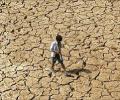
About 60 per cent of net sown area of the country is rain-fed. With every one per cent deficit in rains, the country's gross domestic produce falls by 0.35 per cent.

The southwest monsoon has advanced across northern Indian states, leading to widespread rainfall, waterlogging, road blockages, and rain-related deaths, particularly in Himachal Pradesh and Rajasthan. The Centre is monitoring the situation, especially concerning potential drought conditions in some areas due to the El Nino effect.

India's wholesale price inflation (WPI) increased to 9.87 per cent in June, up from 9.68 per cent in May, primarily due to significant price increases in non-food and food products, with food inflation alone rising to 5.49 per cent.
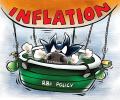
The Reserve Bank of India has increased its retail inflation projection for 2026-27 to 5.1 per cent, up from an earlier estimate of 4.6 per cent. This revision is primarily attributed to mounting input costs, driven by the pass-through of higher global energy prices to domestic petrol and diesel rates, which have seen significant increases since May.

'If because of El Nino, the monsoon is affected adversely in the current year, naturally it will affect income projections and consequently Budget numbers.'

'Geopolitical risks and their impact on oil prices, if any, are another concern for global markets, particularly for India.'

A new study reveals that global warming has accelerated significantly since 2015, even after accounting for natural climate fluctuations. Researchers express concern that current efforts to curb emissions are insufficient to meet the Paris Agreement targets.

India's retail inflation, measured by the Consumer Price Index (CPI), increased to 3.48 per cent in April, up from 3.40 per cent in March, primarily due to a surge in prices of gold and silver jewellery, as well as certain kitchen staples like tomatoes and cauliflower.

'The real shock is going to be from a deficient monsoon.'
India's retail inflation rose to 4.38 per cent in June, driven primarily by costlier food items, pushing it above the Reserve Bank of India's median target of 4 per cent for the first time under the new series.

India's wholesale price inflation surged to 8.30 per cent in April, up from 3.88 per cent in March, primarily driven by a significant increase in the prices of fuel, power, and crude petroleum, according to data from the commerce and industry ministry.

'The MPC is likely to prioritise the key mandate, which is inflation, while relying on other instruments to stabilise the currency and bond markets.'

The finance ministry on Thursday raised concerns over the possible impact of El Nio conditions on India this year, saying if recent forecasts came true, the country could see lower agricultural output and higher inflation. "Some meteorological agencies predict the return of El Nio conditions in India this year. "If these predictions are accurate, then monsoon rains could be deficient, leading to lower agricultural output and higher prices," the ministry said in its monthly economic review.

India is likely to witness a mixed temperature pattern along with wetter-than-usual conditions in May, with the India Meteorological Department (IMD) indicating that rainfall across the country is "most likely to be above normal" at over 110 per cent of the long period average (LPA).

Even if there is an early agreement on a cessation of hostilities in West Asia, the price shock will not go away easily, points out A K Bhattacharya.

'Can you believe there are over 26,500 deaths linked to heatwave-driven ozone in 2024?'

ITC reported a 6.1 per cent year-on-year growth in its consolidated adjusted net profit from continuing operations, reaching ~5,469.74 crore in the January-March quarter (Q4FY26), primarily fuelled by strong performances in its cigarettes and non-cigarette fast-moving consumer goods (FMCG) businesses.

Though the summer is expected to be hotter, global and domestic forecasts point to good rains.

Climate scientists warn that climate change is intensifying heatwaves in India, with the cooling effects of La Nia potentially becoming less effective in a warmer future. The India Meteorological Department (IMD) predicts an early summer with above-normal temperatures and intense heatwave spells, following an unusually dry winter and the warmest February since 1901. Experts emphasize the role of human-caused climate change, along with natural climate drivers like El Nio and La Nia, in shaping weather patterns. While La Nia typically brings cooler temperatures, scientists suggest that under climate change, its ability to mitigate heatwaves may be diminished.

India's peak power demand is projected to hit 270 GW this summer, surpassing last year's record of 250 GW.

Monetary Policy- Easing expected to happen later this financial year.

The Reserve Bank of India (RBI) Governor Sanjay Malhotra is now confronting the classic growth-inflation tradeoff, a situation exacerbated by the West Asia war, which threatens to end the 'goldilocks period' of low inflation and robust growth.

'Monsoon is the pran (life) of our water system.' 'A weak monsoon will have a very negative impact on crops and people's lives.'
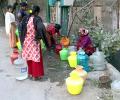
Deputy Chief Minister D K Shivakumar said the borewell in his house in Sadashivanagar in the state capital has gone dry for the first time. This happened despite the fact that Sadashivanagar is located next to Sankey Lake.

El Nino is expected to occur in August-September, but it is unlikely to have any major impact on the monsoon, and the weatherman expects a positive Indian Ocean Dipole, which has a strong influence on rainfall in the country.
